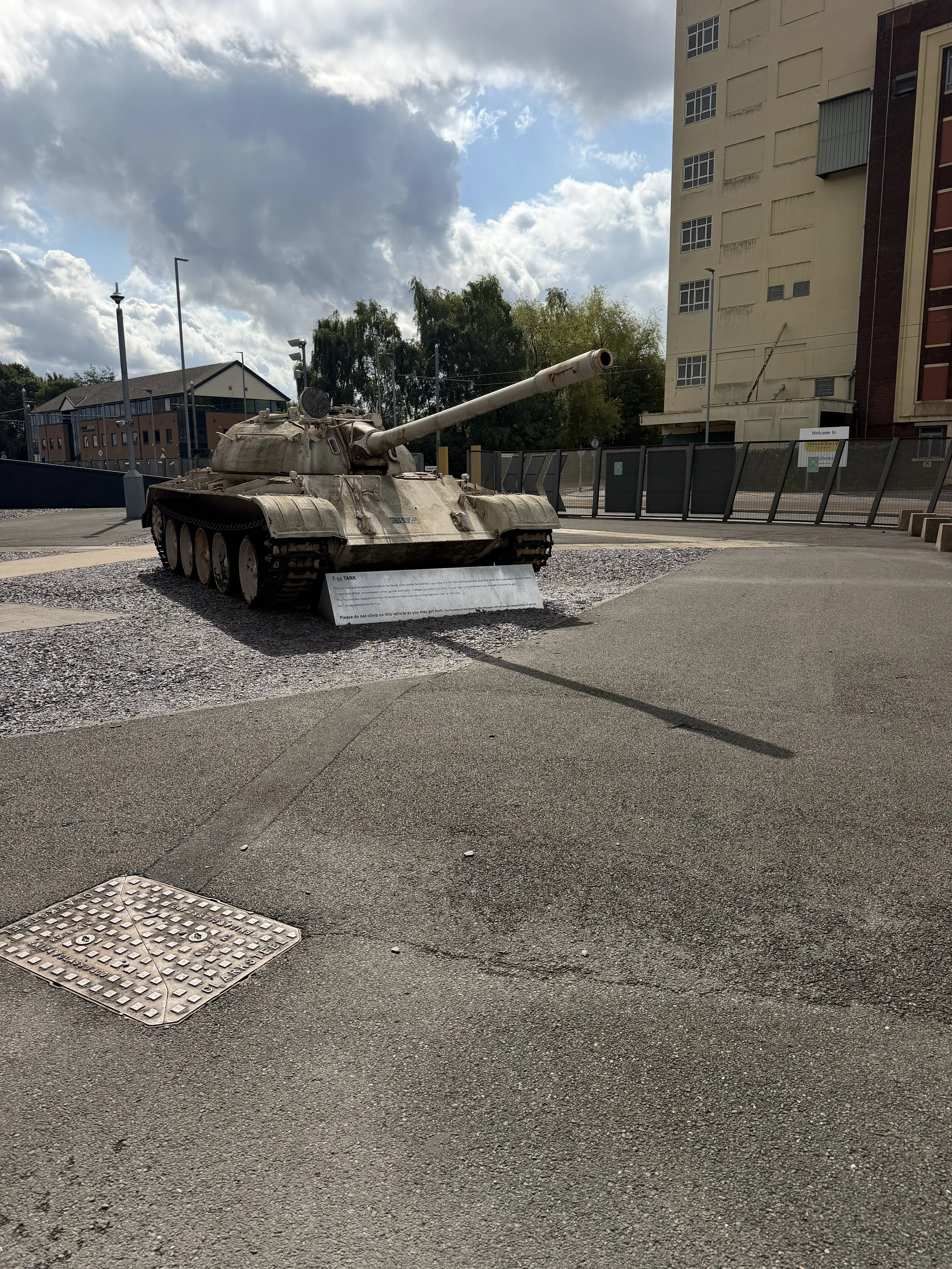
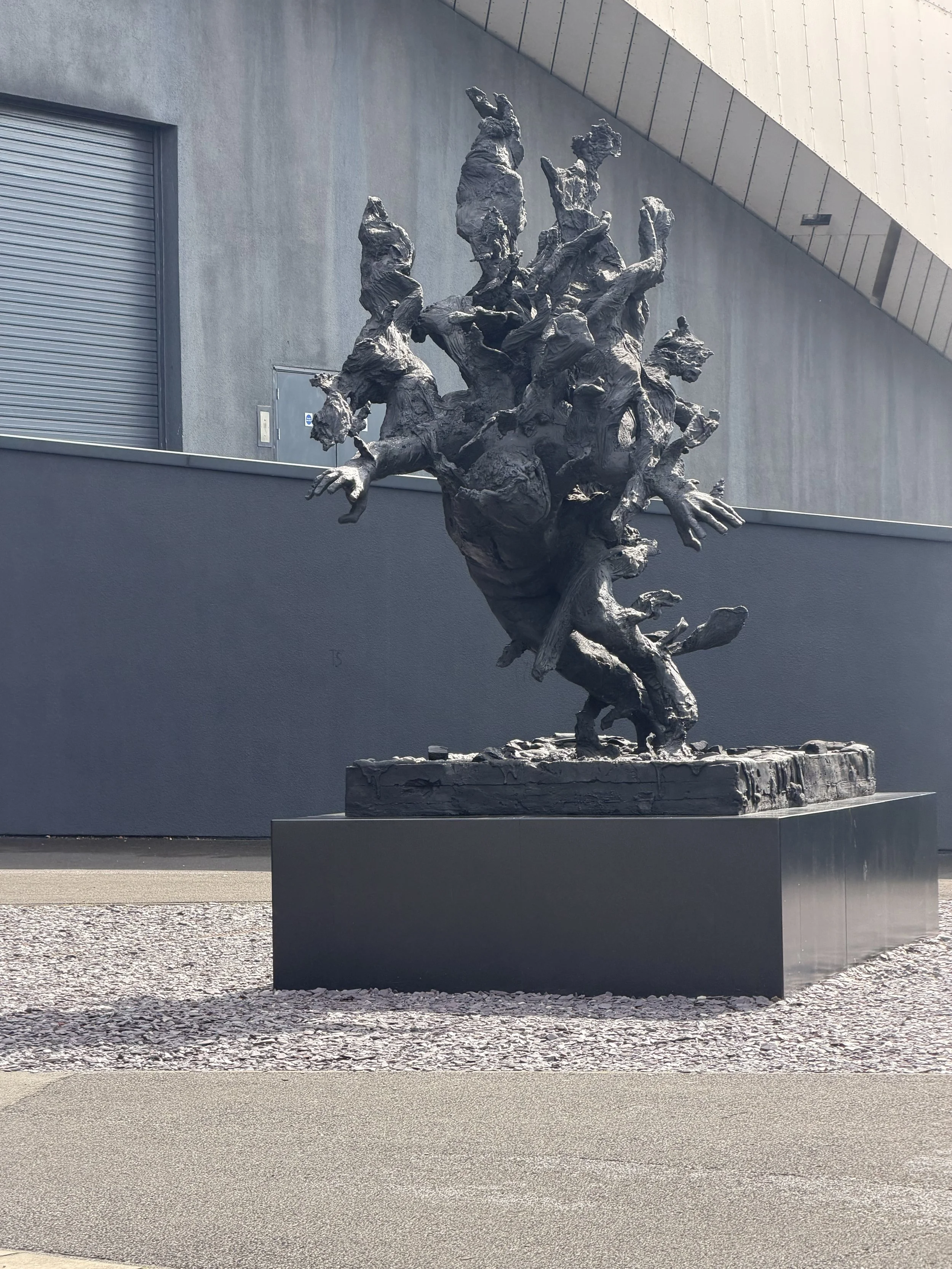
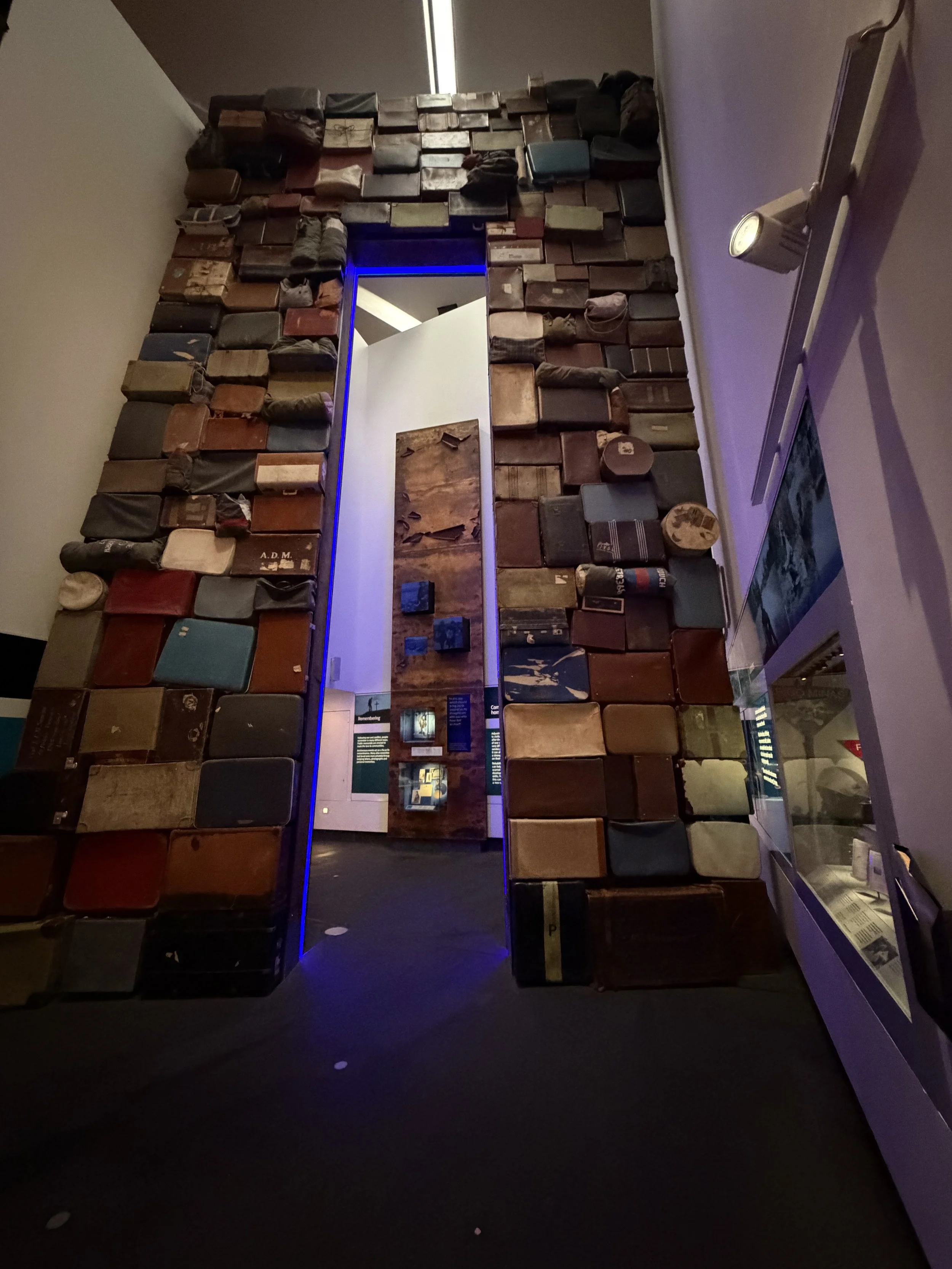
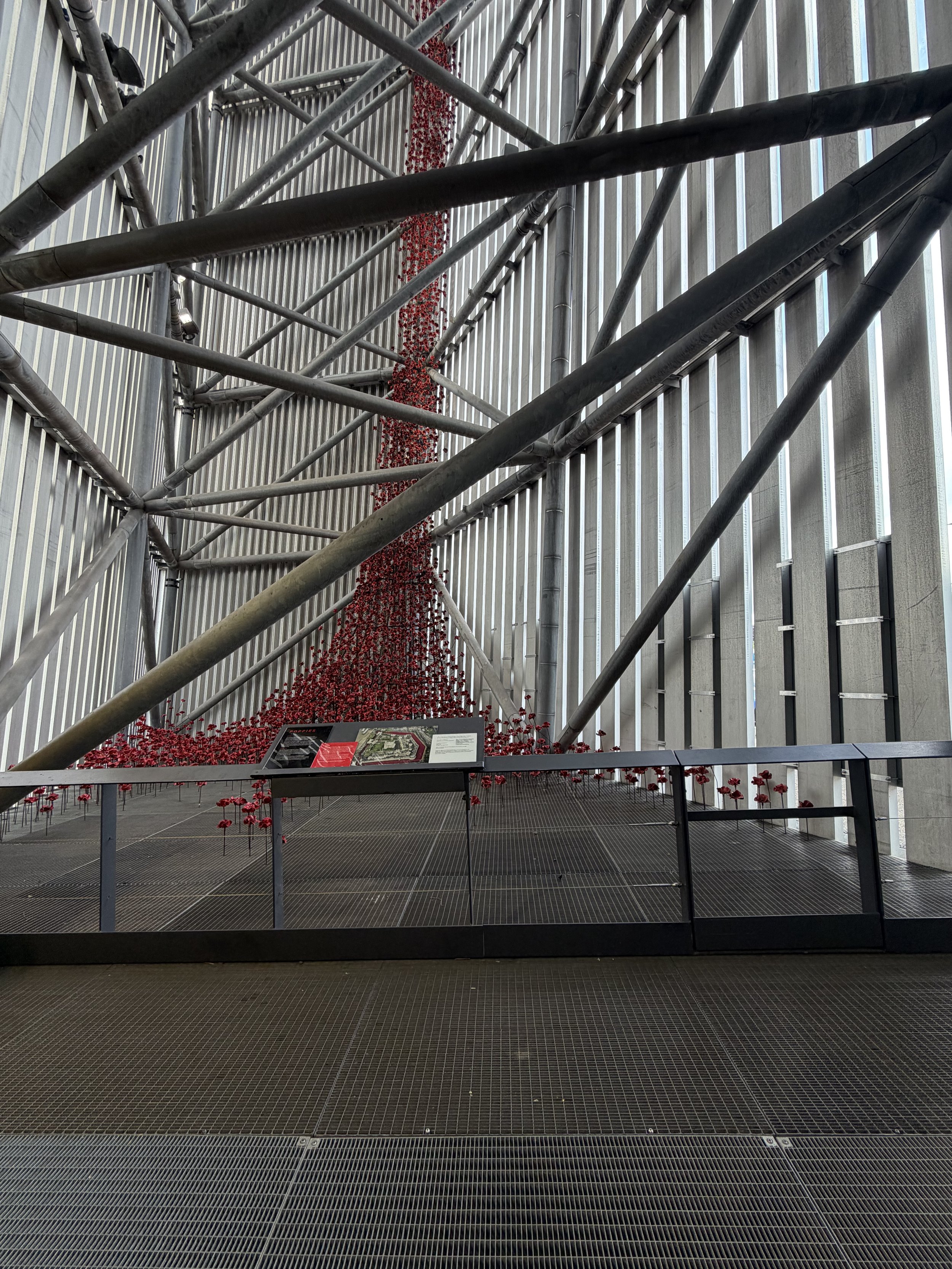
Imperial War Museum North Manchester, UK
History is often told through its loudest moments: the declaration of war, the battle, the victory, the defeat, the name of a commander. We remember the people standing at the front of the photograph. We rarely ask who carried the message, who kept the machinery moving, who treated the wounded, or who made survival possible behind the scenes.
Walking through the Imperial War Museum North in Manchester, I found myself drawn to those quieter stories.
I learned about the animals used in war horses carrying people and supplies, dogs working beside soldiers, and pigeons transporting messages when communication could mean the difference between life and death. They could not understand the politics or ambitions that created the conflict, yet they were pulled into it. They served, suffered, and sometimes saved human lives.
Their stories unsettled me because they revealed something easy to overlook: history does not record every form of sacrifice equally.
I felt the same while learning more about the women whose labor sustained entire war efforts. Women nursed the wounded, worked in factories, transported the injured, carried intelligence, maintained homes, and stepped into responsibilities that society had insisted belonged to men.
Their work was essential, but necessity did not always become recognition. When the crisis passed, many of their contributions were pushed back into the margins of the story.
The museum made me think about how we decide whose work is important enough to remember.
We are taught to associate impact with visibility. We celebrate the person at the microphone, the leader whose name appears in the book, or the figure standing beneath the spotlight. But every visible achievement rests on quieter forms of labor: the person who prepared, carried, cleaned, watched, protected, comforted, or continued when no one was applauding.
This is not only true of war. It is true in families, hospitals, workplaces, communities, and nations. Much of the work that keeps life functioning is performed quietly. It may not receive a title. It may never be photographed. It may not even be acknowledged by the people who benefit from it.
Yet being overlooked does not make that work insignificant. Perhaps that is one reason visiting museums matters. They do more than preserve the past; they challenge the way we have been taught to see it. They invite us to look beyond the central figures and notice the lives at the edges of the frame.
I left the Imperial War Museum North thinking about the horses, dogs, pigeons, and women whose contributions were indispensable, even when their names were not preserved. I also left with a question that belongs to the present:
Who is doing the necessary work around us today while the world looks somewhere else? History may forget quiet labor, but we do not have to.
By: H. N. Ako